

About the Department
About the Department
Study in the Civil Engineering Department at Faculty of Engineering – Sohag University began since the establishment of the faculty in the academic year 2008/2009. Civil Engineering Department is considered one of the most important branches of engineering as it deals with the processes of building and constructing infrastructure. It is the one that specializes in planning and building various structures, including bridges, overpasses, and roads
. Agricultural irrigation systems, airports, water and sewage systems, huge buildings, dams and all buildings that help to raise the status of man, and to place all the resources of nature
Civil engineering is considered one of the important specializations in our lives, as it deals with the study and design of various buildings and all civil structures, while continuing to monitor these structures after their completion to ensure that the plan is proceeding according to the need and purpose of the construction, and analyzing the results to identify weaknesses and try to solve them as quickly as possible. This demonstrates that this specialization is not only about design and implementation, but also goes beyond that and is keen to monitor how the new facility is functioning…
The department's scientific specializations include:
1- Surveying and Geodesy Engineering, which focuses on the study of geometric geographic locations and spatial dimensions.
2- Sanitary Engineering, which focuses on the operation of sewage systems and water treatment plants.
3- Structural Engineering, which focuses on the design and construction of various structures, including metal, wood, industrial, residential, and concrete buildings
4-irrigation engineering focuses on studying the methods necessary to control irrigation systems and certain agricultural water infrastructure.
5- Road and traffic engineering focuses on the design and construction of roads, traffic engineering, and transportation engineering with the aim of improving traffic flow.
6- Fluid mechanics engineering focuses on studying the properties of fluids and their impact on various structures..
7-Management and construction engineering focuses on studying and implementing projects at a low cost and within a short timeframe.
8- Port and marine engineering focuses on the design and implementation of ports and marine facilities, including all related structures such as breakwaters, coastal protection systems, and docks.
A word from the Head of Department:
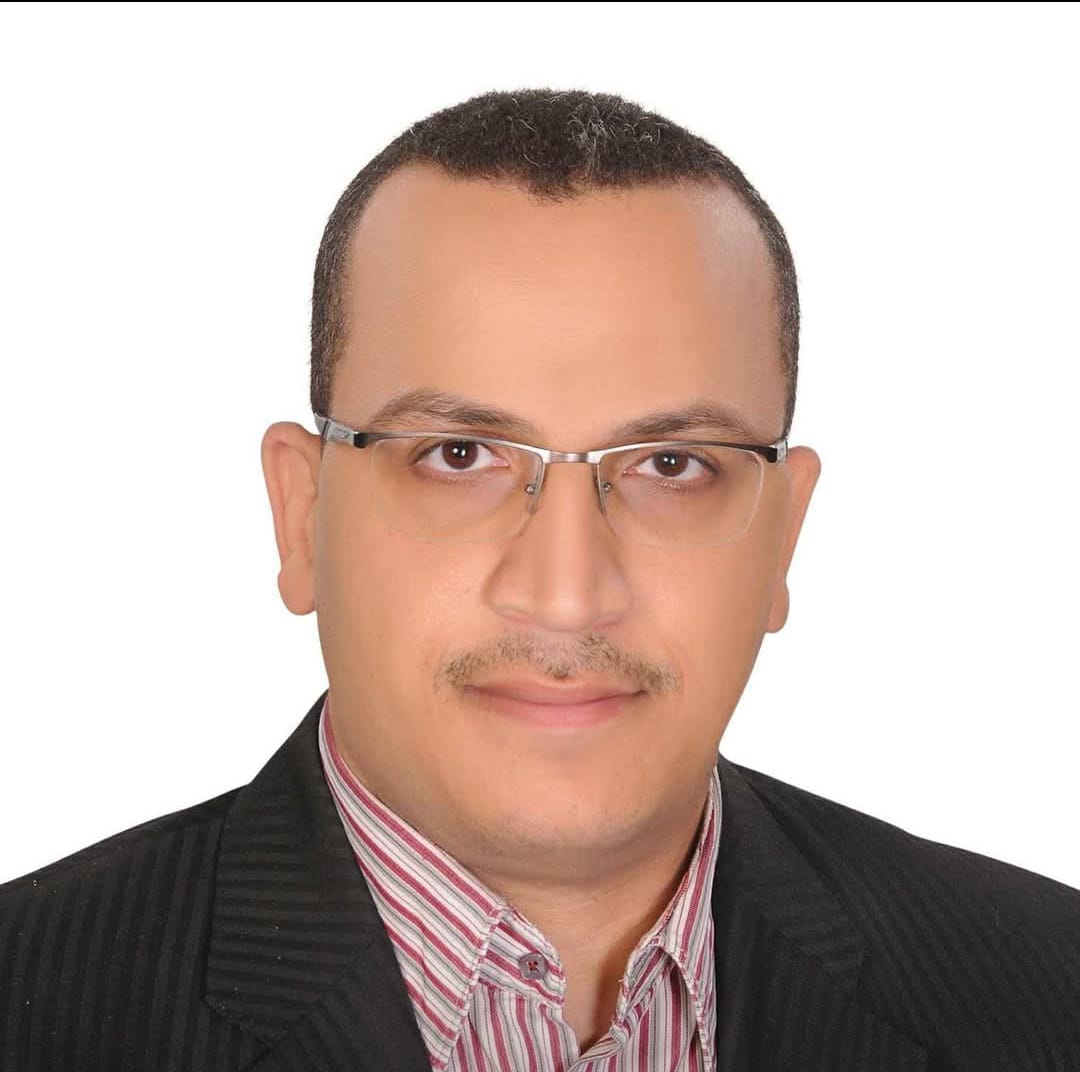
Welcome to the Department of Civil Engineering, Faculty of Engineering, Sohag University, Sohag, Egypt. The Department of Civil Engineering is one of the first departments in Faculty of Engineering Sohag University, which welcomed students in the academic year 2008/2009. The Department of Civil Engineering aims to prepare civil engineers familiar with the basics and skills of applied sciences, to keep pace with global standards.
The department’s mission is to enhance students’ skills by providing specialized training courses and workshops, as well as offering postgraduate programs (diplomas, master’s degrees, and doctorates). It also contributes to community service and engages its members in engineering studies, and the university’s design consultancy center Supervising civil projects and providing appropriate solutions to defects that may appear in various facilities in Upper Egypt
Dr. Yasser Jaber Mustafa
Head of the Civil Engineering Department
Department Vision and Mission
Department Vision
To elevate the civil engineering profession by bridging the gap between theoretical and applied studies.
Department Mission
Graduating distinguished civil engineers capable of taking responsibility and preparing and implementing projects in fields related to human-made structures through effective solutions committed to quality standards to achieve development and solve community problems. The process is based on the reality and needs of the community and the environment.
Department Objectives
To achieve excellence in civil engineering and equip students with the knowledge and skills that enable them to design and implement human-made structures such as buildings, roads, bridges, tunnels, sewage networks, dams, and others With professional capabilities and scientific methods compatible with environmental, human, and technological requirements that meet human needs according to the social, environmental, and technological context.
Providing outstanding engineering education through:
1- Preparing graduates capable of using modern technical tools in engineering projects, with the ability to practice analysis, creativity and self-learning in the field of civil engineering.
2-Conducting diverse studies and research that provide solutions to engineering project problems through graduate programs capable of keeping pace with continuous technological advancements.
3-Establishing partnerships with foreign and Arab universities, both at the undergraduate and graduate levels, as well as in scientific research
4-Meeting the needs of the local and regional labor market and the development movement in the major construction projects sector in accordance with the latest methods and technologies of civil engineering globallyز
Admission Requirements
1-Applicants for the various programs must meet all the requirements set by the faculty Council and in accordance with the distribution mechanism between programs after successfully completing Level (0) with a total of 32 credit hours
2-Students enrolled in a similar program in one of the engineering faculties at Egyptian or foreign universities may be accepted for transfer, provided that the student meets the faculty admission requirements. The courses studied by the student in the faculty from which he transferred will be credited to him according to the rules set by the faculty council and the necessary credit transfer will be made.
3-International students are also accepted into the faculty through the General Administration for International Students, in accordance with the admission requirements set annually by the Supreme Council of Universities.
Duration of Study
1-The duration of study in any program is five academic years (five levels over ten semesters), with each semester lasting fifteen weeks. Some courses may be offered in a summer semester of seven weeks of intensive study.
2- A high-achieving student may be allowed to graduate and obtain a Bachelor of Science degree in Engineering through the credit-hour system, in a minimum period of 4 academic years (or eight major semesters), after fulfilling all graduation requirements. The maximum period of study is twenty major semesters (ten academic years).
3-This does not include semesters that are frozen (enrollment suspended) for reasons acceptable to the faculty board
Language of Instruction
- Instruction in all general programs is in English.
Staff Members
Professor
- Prof. Mohamed Mahmoud Ahmed
- Dr. Talaat Ali Ahmed
- Prof. Yasser Gaber Mostafa
- Prof. Mamdouh Abbas Qanawi
Assistant Professor
- Dr. Alaa El-Din Mohamed
- Dr. Khaled Abdel-Samie
- Dr. Ahmed Khaled Abdel-Allah
- Dr. Ahmed Attia
- Dr. Ahmed Nour El-Din
Demonstrator
Dr. Ahmed Omar Kamel Mahmoud
Dr. Ahmed Salah Mohamed
Dr. Mohamed Gamal Ibrahim
Dr. Mustafa Mahmoud
Dr. Mohamed Zakaria Gad
Assistant Lecturers
- Assistant Lecturer/ Mo’men Adel Al-Hamdi
- Assistant Lecturer/ Heba Abdel Nasser Abdel-Gaid
- Assistant Lecturer/ Ashraf Salah Ahmed
- Assistant Lecturer/ Amjad Aref Ali
- Assistant Lecturer/ Mohamed Gabril Ali
- Assistant Lecturer/ Amr El-Sayed Khalaf Allah
- Mr Mohammad Najah Nooruddin
- Mr /Haitham Abdul Hamid Ibrahim
- Mr Mustafa Hussein Hashim
- Mr Nasser Ahmad Mohammed
- Mr Adil Ahmad Mahmoud
- Mr Mohamed Ali
- Mr Sabir Ali Syed
- Mr Hussein Shawky Othman Atti
- Mr Mohammad Ramadan
- Mr / Musa Shelaby Musa
Demonstrator
Mr/ Karam Magdy Fahmy Khaleh
Mr/ Tariq Khalifa Elsayed Mohamed
Mr/ Ahmed Khalaf Khalifa Abdel Moneim
Mr. Thomas Abdel-Masih Mikhail
Mr/ Mohamed Ahmed Elsayed Allam
Mr/ Ahmed Imad Farid
Bachelor’s Programs
For information on the university programs for all academic groups in the Department of Civil Engineering click here
Graduate Programs
Research areas
Structural engineering
Reinforced concrete
- Fatigue analysis of RC structures
- Repair and strengthening of RC structures
- Shear behavior of RC members repaired with CFRP
- Numerical verification and analysis of RC members using FEM
- Crack propagation of RC members due to moving load
- Dynamic simulation of RC beam-column connection due to seismic loading
- Modeling of degraded RC members due to the repeated loading
Steel Structures
2-Application of artificial intelligence in civil engineering
3-Enhancing seismic performance of structures
Environmental Engineering
1- Nanotechnology for sustainable wastewater treatment and use for agricultural production.
2- Microalgal remediation of anaerobic pretreated pharmaceutical wastewater for sustainable biodiesel production and electricity generation.
3-Pretreatment and co-digestion of wastewater sludge for biogas production.
4- Biofuel production and utilization through smart and sustainable biowaste management.
5- Protection of public water supplies from viruses and pathogens.
6- COVID-19 and treatment of wastewater.
7- COVID-19 and treatment of drinking water.
8- Public perceptions for the use of nanomaterials for in-home drinking water purification devices.
Hydraulics and Irrigation
2-Flow Characteristics in Close Conduit.
3-Water Resource Management.
4-Water Resource Development.
5-Hydrologic and Hydraulic Modelling Integrated with Geographic Information System.
6-Identification and Analysis of Ancient Water Harvesting System and Associated Hydraulic Structures.
Highway and traffic Engineering
2- Using waste materials in cold mix asphalt.
3- Effect of the COVID-19 on- driving behavior and road safety.
4- Day time and night time operating speed on urban and rural roads
5- El-Garhy, B., El Hamrawy, S. & Abdel-Wahed, T. (2007). 3D Finite Element Analysis of Rigid Airport Pavement-Parametric Study. The Egyptian Geotechnical Society, 18(1), pp 33-44.
6- Hashim, I. & Abdel-Wahed, T. (2011). Evaluation of Performance Measures for Rural Two-Lane Roads in Egypt. Alexandria Engineering Journal, 50(3), pp. 245- 255. https://doi.org/10.1016/j.aej.2011.08.001.
7- Hashim, I., El Hamrawy, S. & Abdel-Wahed, T. (2011). Assessment of Performance Measures for Rural Two-Lane Roads in Egypt. CERM, Azhr University, Egypt, 33(2), pp. 336-351.
8- Hashim, I. & Abdel-Wahed, T. (2011). Quantifying the Impact of Highway Geometry on Traffic Performance for Two-Lane Roads. CERM, Azhr University, Egypt, 33(4), pp. 221-235.
9- Hashim, I. & Abdel-Wahed, T. (2011). Estimating Traffic Performance from Highway Geometric Characteristics on Two-Lane Roads. CERM, Azhr University, Egypt, 43(1), pp. 57-71.
10- Hashim, I. & Abdel-Wahed, T. (2012). Effect of Highway Geometric Characteristics on Capacity Loss. Journal of Transportation Systems Engineering and information Technology, Beijing Jiaotong University, China. http://dx.doi.org/10.1016/S1570-6672(11)60223-7.
11-Osman. Aymn, Abdel-Wahed, T. & Rashwan, N. (2015). Utilization of Waste Iron Slag on Hot Mix Asphalt Concrete Mixtures. 5th Annual International Conference on Civil Engineering, Structural Engineering and Mechanics – 25-28 May 2015, Athens, Greece.
12- Hashim, I., Abdel-Wahed, T. & Mustafa, Y. (2016). Toward an operating speed profile model for rural two-lane roads in Egyp. Journal of Traffic and Transportation Engineering (English Edition), 3(1), pp. 82-88. http://dx.doi.org/10.1016/j.jtte.2015.09.005.
13- Abdel-Wahed, T. & Rashwan, N. (2016). Application of Cement Dust and OPC as Mineral Filler in the binder Hot Mix Asphalt. LJMU International Conference on; Asphalt, Pavement Engineering and Infrastructure, Liverpool, UK, Vol. 15, ISBN 978-0-9571804-8-2.
14- Abdel-Wahed, T. & Al Nagiem, H. (2016). Investigating the Effects of Cement and Cement Kiln Dust as a Filler on the Mechanical Properties of Cold Bituminous Emulsion Mixtures. International Journal of Civil Engineering and Technology, 7(1), pp. 441- 453.
15- Hashim, I., Abdel-Wahed, T. & Mandor, A. (2016). Measuring Control Delay at Signalized Intersections in Egypt. International Journal of Advance Research in Science and Engineering, 5(11), pp.153-165.
16- Abdel-Wahed, T. & Hashim, I. (2017). Effect of Speed Hump Characteristics on Pavement Condition. Journal of Traffic and Transportation Engineering (English Edition), 4(1), pp. 103-110. https://doi.org/10.1016/j.jtte.2016.09.011.
17- Mohamed, A. S., Abdel-Wahed, T. A., & Othman, A. M. (2019). Investigating the Effect of Corrective Maintenance on the Pavement Life Cycle and the Optimal Maintenance Strategies. In CICTP 2019, pp. 811-822. https://doi.org/10.1061/9780784482292.073.
18-Mohamed, A.S., Abdel-Wahed T.A. & Othman A.M (2019). Modelling the Raveling Propagation in Hot and Dry Climate by Using the Statistical Analysis Concepts. In CICTP 2019, pp. 868-879. https://doi.org/10.1061/9780784482292.078.
19- Abdel-wahed, T., Younes, H., Othman, A., & El-Assaal, A. (2020). Evaluation of Recycled Asphalt Mixture Technically and Economically. JES. Journal of Engineering Sciences, 48(3), pp. 360-370. http://doi.org/ 10.21608/JESAUN.2020.107603.
20- Megahid, A. R., Younis, H., Abdel-Wahed, T., & Abdel-Sabour, E. (2020). Utilization of industrial waste material in highway construction. JES. Journal of Engineering Sciences, 48(3), pp. 373-382. http:// doi.org/ 10.21608/JESAUN.2020.107604.
21- Moussa, G., Abdel-Raheem, A., & Abdel-Wahed, T. (2020). Investigating the moisture susceptibility of asphalt mixtures modified with high-density polyethylene. JES. Journal of Engineering Sciences, 48(5), pp. 765-782. http:// doi.org/ 10.21608/jesaun.2020.39052.1001.
22- Mohamed, A. S., Abdel-Wahed, T. A., & Othman, A. M. (2020). Investigating effective maintenance policies for urban networks of residential cities by using optimum and sensitivity analyses. Canadian Journal of Civil Engineering, 47(6), pp. 691-703, https://doi.org/10.1139/cjce-2018-0709.
23- Abdel-Wahed, T., Rashwan, N. K., & Maurice, A. E. (2020). The physical properties of bitumen modified with ilmenite and bentonite nanoparticles. HBRC Journal, 16(1), pp. 335-350, http://doi.org/10.1080/16874048.2020.1834904.
24- Badry, M. M., Dulaimi, A., Shanbara, H. K., Al-Busaltan, S., & Abdel-Wahed, T. (2021). Effect of Polymer on the Properties of Bitumen and Pavement Layers, Case Study: Expressway No. 1, Republic of Iraq. In IOP Conference Series: Materials Science and Engineering, 1090(1), p. 012032. IOP Publishing, http://doi.org/ 10.1088/1757-899X/1090/1/012032.
25- Moussa, G. S., Abdel-Raheem, A., & Abdel-Wahed, T. (2021). Effect of Nanoclay Particles on the Performance of High-Density Polyethylene-Modified Asphalt Concrete Mixture. Polymers, 13(3), 434, https://doi.org/10.3390/polym13030434.
26- Shanbara, H. K., Dulaimi, A., Al-Mansoori, T., Al-Busaltan, S., Herez, M., Sadique, M., & Abdel-Wahed, T. (2021). The future of eco-friendly cold mix asphalt. Renewable and Sustainable Energy Reviews, 149, 111318, https://doi.org/10.1016/j.rser.2021.111318.
27. Abdel-Wahed, T., Abdel-Raheem, A., & Moussa, G. S. (2022). Performance Evaluation of Asphalt Mixtures Modified with Nanomaterials. MEJ. Mansoura Engineering Journal, 47(1), pp. 1-16. https://doi.org/10.21608/BFEMU.2022.221670
28- Abdel-Wahed, T., El Esawey, M. & Mohamed, S. (2022). A Simultaneous System Model to Estimate Temperature of Pavement Layers: Development and Validation. JES. Journal of Engineering Sciences, 50(2), pp. 59-74. https://doi.org/10.21608/JESAUN.2022.104930.1086.
29- Khaled, A., Shalaby, M., Negim, O., & Abdel-Wahed, T. (2022). Comparative Study of the Egyptian Code for Reusing Treated Wastewater for Agriculture in Terms of Health Controls. SEJ. Sohag Engineering Journal, 2(1), pp. 1-14, http://doi.org/10.21608/sej.2022.115242.1006.
30- Abdel-Wahed, T. & El Esawey, M. (2022). A Comparison of Daytime and Nighttime Operating Speed on Rural Multi- Lane Highway Sections in Egypt. Accepted at the 6th International Symposium on Highway Geometric Design featuring the 6th Urban Street Symposium (ISHGD 2022), 26-29 June (2022), Amsterdam.
31- Abdel-Wahed, T., Shanbara, H. K., Dulaimi, A. & Nageim, H. (2022). The Impact of Cement Kiln Dust and Cement on Cold Mix Asphalt Characteristics at Different Climate. Sustainability, 14(7), 4173; https://doi.org/10.3390/su14074173.
32- Abdel-Wahed, T., & Mahmoud A. (2022). Enhancement of Polymer on Road Problematic Soil Stabilization. SEJ. Sohag Engineering Journal, 2(1), pp. 48-55, http://doi.org/ 10.21608/SEJ.2022.126328.1010.
33-Khaled, A., Shalaby, M., Negim, O., & Abdel-Wahed, T. (2022). Egyptian Reuse Standards of Treated Wastewater for Irrigation: A Comparative Study of Physico-Chemical and Agronomic Controls. MEJ. Mansoura Engineering Journal, 47(2), pp. 43-59, http://doi.org/ 10.21608/bfemu.2022.233314.
34- Mohamed, A. S., Cao, Z., Xu, X., Xiao, F., & Abdel-Wahed, T. (2022). Bonding, rheological, and physiochemical characteristics of reclaimed asphalt rejuvenated by crumb rubber modified binder. Journal of Cleaner Production, 373, 133896, https://doi.org/10.1016/j.jclepro.2022.133896.
35-Mandor, A., Hashim, I., El-Dessoky, I., & Abdel-Wahed, T. (2022). Calibration and Validation of Microsimulation Models for Estimating Control Delay at Signalized Intersections in Upper Egypt, Sohag city as case study. Sohag Engineering Journal, 2(2), 106-119, http://doi.org/ 10.21608/sej.2022.157149.1020.
36. Mohamed, A. S., Xiao, F., Hettiarachchi, C. & Abdel-Wahed, T. (2023). Bond Strength in Dry Condition of Reclaimed Asphalt Modified by Crumb Rubber Modified Binder. The Journal of Adhesion, 99(4), pp. 691-720. https://doi.org/10.1080/00218464.2022.2046561.
37-Ahmed, A. K. A. Shalaby, M., Negim, O., & Abdel-Wahed, T. (2023). Eco-Friendly Enhancement of Secondary Effluent Characteristics with Air and Oxygen Nanobubbles Generated by Ceramic Membrane Filters. Environmental Processes, 10(1), 13.ISO 690, https://doi.org/10.1007/s40710-023-00628-9.
38- Abdel-Raheem, A., Dulaimi, A., Mohamed, A. S., Moussa, G. S., Özkılıç, Y. O., Mashaan, N., … & Abdel-Wahed, T. (2023). Investigating the Potential of High-Density Polyethylene and Nano Clay Asphalt-Modified Binders to Enhance the Rutting Resistance of Asphalt Mixture. Sustainability, 15(18), 13992. https://doi.org/10.3390/su151813992
Geotechnical engineering
2- Numerical modelling of soils and structures
3- Reinforced soil
4- Soil-Structure Interaction
5- Interaction behavior between existing building piles and piles supporting excavation
6- Analysis of unconnected piled raft with cushion
7- Serviceability and ultimate capacity of floating energy piles
8- Effects of wetting-drying on shear stiffness of soils
Graduation Requirements
The requirements for obtaining a Bachelor of Science degree in engineering programs are as follows:
First: The student has successfully passed (with a grade of at least D) the courses mentioned in the curriculum and those required by the curriculum while meeting all the requirements of the compulsory and elective courses and provided that the number of approved hours is not less than 160 approved hours.
• At least credentialed with an overall cumulative GPA for the years of study of at least 2.0 (C) including the graduation project.
Secondly: Successfully passing the military education course.
Third: Passing courses in which the assessment is successful or deposited and does not count within the cumulative rate such as summer training.
Work Areas
A civil engineering graduate is expected to get a job in one of the following fields:
Execution and supervision engineer of operating projects.- Execution engineer of roads and bridges.
Implementation and supervision engineer in a water and sewerage company- Implementation and supervision engineer of irrigation projects- pursue postgraduate studies very easily.
A graduate of the architecture program is expected to gain employment in one of the following fields:
Architectural design firms; Design and preparation of tender documents, urban design and detailed planning include work in the construction industry, construction technology, rehabilitation, building preservation, urban context and urban planning. In addition, they can be enrolled in graduate studies at relevant universities or scientific research centers.